

Can a Marble Bridge Saw Blade be used for cutting other stones?
Leave a message

In the world of stone cutting, the choice of saw blade is crucial for achieving efficient and high - quality results. As a supplier of Marble Bridge Saw Blades, I often receive inquiries from customers about whether these blades can be used for cutting other stones. This blog aims to explore this question in depth, providing scientific and practical insights.
Understanding Marble Bridge Saw Blades
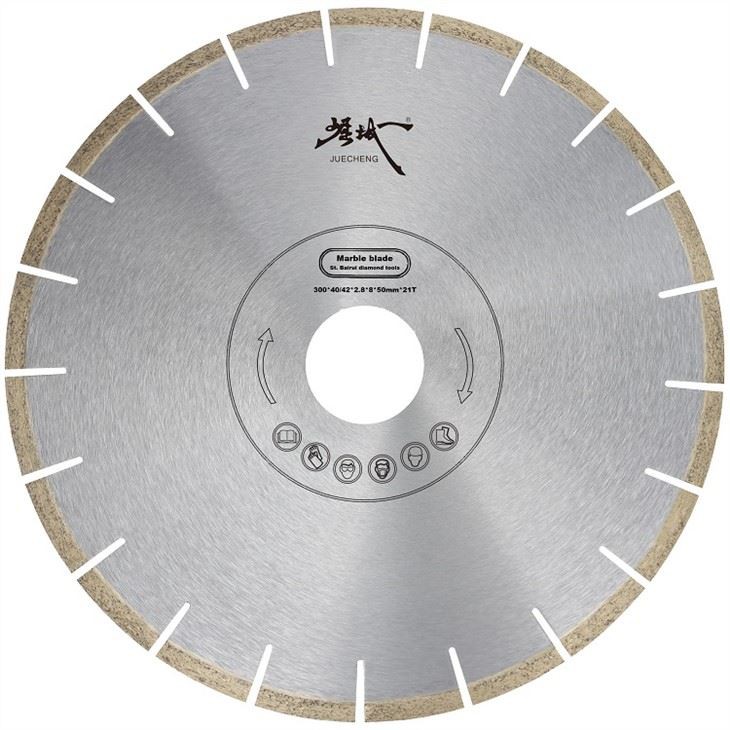
Marble Bridge Saw Blades are specifically designed for cutting marble. They are typically diamond - tipped, as diamonds are the hardest known natural material, making them ideal for cutting through the tough and abrasive surface of marble. The design of these blades takes into account the unique properties of marble, such as its relatively soft yet brittle nature.
The diamond segments on a Marble Bridge Saw Blade are carefully engineered. The size, shape, and concentration of the diamonds, as well as the bond that holds them in place, are optimized for cutting marble. The bond is a matrix material that secures the diamonds and wears away at a controlled rate during cutting, exposing new diamonds to maintain the cutting edge.

Properties of Different Stones
To determine whether a Marble Bridge Saw Blade can be used for cutting other stones, we first need to understand the properties of various stones.
Granite
Granite is a much harder and more abrasive stone compared to marble. It is composed mainly of quartz, feldspar, and mica. Quartz, in particular, is extremely hard, with a Mohs hardness of 7, while marble has a Mohs hardness of around 3 - 4. The high quartz content in granite means that it will wear down the diamond segments of a saw blade much faster than marble.
Limestone
Limestone is a sedimentary rock that is generally softer than granite but can vary in hardness. It is composed mainly of calcium carbonate. Some limestones are similar in hardness to marble, while others may be slightly harder or softer. The porosity of limestone can also vary, which can affect the cutting process.
Sandstone
Sandstone is another sedimentary rock made up of sand - sized grains of mineral, rock, or organic material. It can be relatively soft or quite hard, depending on the type of cementing material that holds the grains together. Sandstone is often abrasive due to the presence of quartz grains.
Using a Marble Bridge Saw Blade on Other Stones
Advantages
- Cost - Effective in Some Cases: If you have a Marble Bridge Saw Blade on hand and need to make a few cuts on a softer stone like some types of limestone, using the existing blade can be a cost - effective solution. It can save you the expense of purchasing a new blade specifically for that stone.
- Familiarity: For operators who are used to working with Marble Bridge Saw Blades, using the same blade for other stones can provide a sense of familiarity. They are already accustomed to the blade's handling characteristics, which can lead to more consistent cuts.
Disadvantages
- Reduced Blade Life: When used on harder or more abrasive stones like granite, the diamond segments of a Marble Bridge Saw Blade will wear down much faster. This is because the bond and diamond concentration are optimized for marble, not for the intense abrasion caused by harder stones. As a result, the blade will need to be replaced more frequently, increasing the overall cost of cutting.
- Poor Cutting Quality: The cutting performance may be compromised when using a Marble Bridge Saw Blade on stones with different properties. For example, on granite, the blade may struggle to cut smoothly, resulting in a rough cut surface. The blade may also overheat due to the increased resistance, which can further damage the blade and affect the quality of the cut.
Factors to Consider
Stone Hardness and Abrasiveness
As mentioned earlier, the hardness and abrasiveness of the stone are the most important factors. If the stone is significantly harder or more abrasive than marble, a Marble Bridge Saw Blade is likely not the best choice. However, for stones with similar hardness to marble, there may be a possibility of using the blade, but with some limitations.
Cutting Volume
If you only need to make a few cuts on a different stone, using a Marble Bridge Saw Blade may be acceptable. But for large - scale cutting projects, it is advisable to use a blade specifically designed for that stone to ensure efficiency and cost - effectiveness.
Blade Design and Quality
The design and quality of the Marble Bridge Saw Blade also play a role. High - quality blades with a more durable bond and better - quality diamonds may be more versatile and able to handle a wider range of stones. However, even the best - quality Marble Bridge Saw Blade will have its limitations when it comes to cutting very hard or abrasive stones.
Case Studies
Cutting Limestone with a Marble Bridge Saw Blade
In a small - scale project where a contractor needed to cut some soft limestone for a decorative feature, they decided to use a Marble Bridge Saw Blade. The limestone was similar in hardness to marble, and the cuts were relatively small in number. The blade was able to make the cuts, although the cutting speed was slightly slower than when cutting marble. The blade showed some signs of wear but was still usable for a few more cuts on the limestone.
Attempting to Cut Granite with a Marble Bridge Saw Blade
In another case, a DIY enthusiast tried to cut a small piece of granite using a Marble Bridge Saw Blade. The blade quickly overheated, and the diamond segments started to wear down rapidly. The cut surface was rough, and the blade became ineffective after just a few inches of cutting.
When to Use a Marble Bridge Saw Blade for Other Stones
If you are dealing with a stone that is similar in hardness and abrasiveness to marble, such as some soft limestones or certain types of sandstone, a Marble Bridge Saw Blade can be used for occasional or small - scale cutting. However, for large - scale projects or stones that are significantly harder or more abrasive, it is recommended to use a blade specifically designed for that stone.
For example, if you need a 14 Inch Marble Saw Blade for cutting marble, it may also work for some limited cutting of softer stones. Our Marble Cutting Saw Blade is designed with high - quality diamonds and an optimized bond for efficient marble cutting, and can be considered for similar - hardness stones in certain situations. And our Marble Saw Blade Cutting Tools are engineered to provide the best performance for marble, but their applicability to other stones depends on the factors mentioned above.
Conclusion
In conclusion, while a Marble Bridge Saw Blade can be used for cutting some other stones, it is not a one - size - fits - all solution. The hardness, abrasiveness, and cutting volume of the stone are key factors to consider. For optimal results, especially in large - scale and professional projects, it is often best to use a blade specifically designed for the type of stone being cut.
If you are in the market for high - quality Marble Bridge Saw Blades or have questions about which blade is suitable for your specific cutting needs, we are here to help. Contact us to discuss your requirements and explore the best solutions for your stone - cutting projects.
References
- "The Properties of Natural Stone" by Stone Industry Association
- "Diamond Saw Blade Technology" by Cutting Tools Research Institute


