

Is it necessary to use coolant when using a marble saw blade?
Leave a message

Hey there! As a supplier of Marble Saw Blades, I often get asked whether it's necessary to use coolant when using a marble saw blade. Well, let's dive right into this topic and break it down.
First off, let's understand what a marble saw blade does. We offer a variety of marble saw blades, like the Marble Bridge Saw Blade, Marble Cutting Saw Blade, and Normal Marble Saw Blade. These blades are designed to cut through marble, which is a pretty tough material. Marble is a natural stone composed mainly of calcite or dolomite crystals. When you're cutting through it, the saw blade has to work hard against the dense structure of the marble.
Now, let's talk about why coolant might be necessary. One of the main reasons is heat. When a saw blade cuts through marble, a significant amount of friction is generated. This friction causes the temperature of the blade to rise rapidly. If the temperature gets too high, it can have several negative effects.
For starters, high temperatures can damage the diamond segments on the saw blade. The diamonds in the blade are what actually do the cutting. But diamonds have a limited tolerance for heat. When the blade overheats, the diamonds can start to break down or lose their sharpness. This means the blade won't cut as effectively, and you'll have to replace it more often. That's not only a hassle but also an added cost.
Another issue is the warping of the blade. The metal body of the saw blade can expand and warp when it gets too hot. A warped blade won't cut straight, which can lead to inaccurate cuts and wasted marble. You don't want to end up with a bunch of unusable marble pieces because your blade warped due to overheating.
Coolant helps to keep the temperature of the blade in check. It acts as a heat transfer medium, carrying the heat away from the blade and dissipating it. There are different types of coolants available, such as water-based coolants and oil-based coolants. Water is a common and cost - effective coolant. It's easy to find and can be used in most sawing operations. When water is applied to the blade during cutting, it absorbs the heat and evaporates, taking the heat energy with it.
Oil-based coolants, on the other hand, offer better lubrication in addition to heat dissipation. They can reduce the friction between the blade and the marble even more effectively than water. This means less heat is generated in the first place. However, oil-based coolants can be more expensive and may require more careful handling and disposal.
But it's not all rosy when it comes to using coolant. There are some downsides too. For example, using coolant can create a messy work environment. If you're using water as a coolant, you'll have to deal with wet marble dust, which can be heavy and difficult to clean up. And if you're using an oil - based coolant, there's a risk of spills and environmental contamination if not handled properly.
There are also situations where you might not need to use coolant. If you're making small, occasional cuts on thin pieces of marble, the heat generated might not be enough to cause significant damage to the blade. In these cases, you can probably get away with not using coolant. However, if you're doing large - scale cutting operations, or cutting thick pieces of marble, using coolant is highly recommended.
Let's take a look at some real - world scenarios. Suppose you're a contractor working on a large marble flooring project. You'll be cutting a lot of marble tiles to fit the space. Without coolant, your saw blades will wear out quickly, and you'll have to keep replacing them. This will slow down your work and increase your costs. On the other hand, if you use coolant, your blades will last longer, and you'll be able to make more accurate cuts. This means you can finish the project faster and with better quality results.
Now, if you're a DIY enthusiast working on a small home project, like cutting a marble countertop for your kitchen, you might think you don't need coolant. But even for a small project, using coolant can still save you money in the long run by extending the life of your saw blade.
In addition to temperature control, coolant also helps with the removal of marble dust. As the blade cuts through the marble, it creates a lot of dust. This dust can be a health hazard if inhaled. Coolant helps to keep the dust down by wetting it and preventing it from becoming airborne. This is not only better for your health but also for the overall cleanliness of your workspace.
So, in conclusion, while it's not always necessary to use coolant when using a marble saw blade, in most cases, it's a good idea. It can protect your saw blade, improve the quality of your cuts, and create a safer work environment.
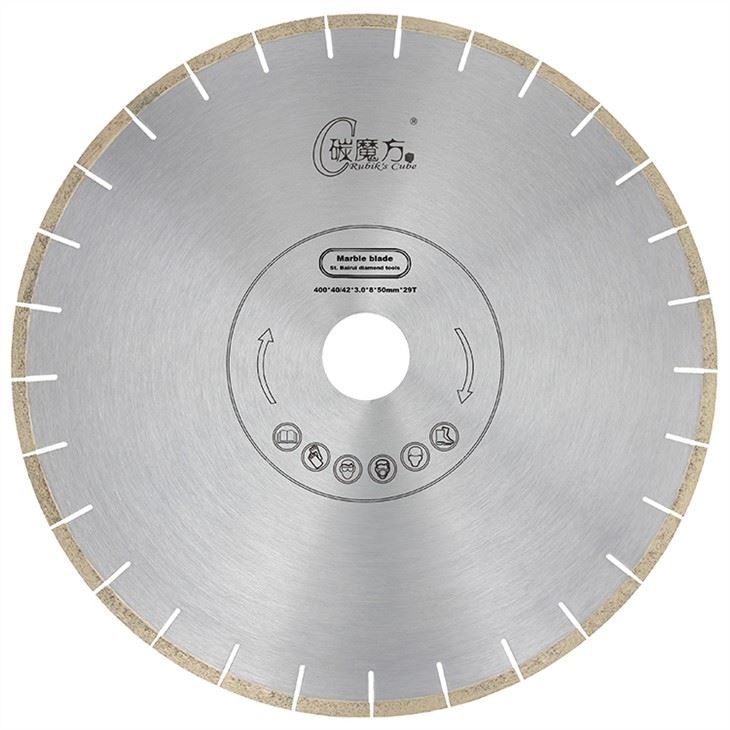

If you're in the market for high - quality marble saw blades, we've got you covered. We offer a wide range of options, including the Marble Bridge Saw Blade, Marble Cutting Saw Blade, and Normal Marble Saw Blade. Our blades are designed to provide excellent cutting performance, but using coolant will help them perform even better and last longer.
If you have any questions about our products or the use of coolant with marble saw blades, feel free to reach out. We're always here to help you make the best choices for your cutting needs. Whether you're a professional contractor or a DIYer, we can provide you with the right advice and products. So, don't hesitate to contact us if you're interested in purchasing our marble saw blades. Let's work together to make your marble cutting projects a success!
References
- "Handbook of Stone Cutting and Polishing" - A comprehensive guide on stone processing techniques.
- Research papers on the effects of heat on diamond saw blades in the field of stone cutting.


