

What is the durability of a sandstone saw blade?
Leave a message

The durability of a sandstone saw blade is a crucial factor that significantly impacts the efficiency and cost - effectiveness of sandstone cutting operations. As a trusted sandstone saw blade supplier, I have witnessed firsthand the importance of understanding and maximizing the durability of these essential tools.
Factors Affecting the Durability of Sandstone Saw Blades
Abrasive Material Quality
The abrasive material used in the saw blade is the cornerstone of its durability. High - quality diamonds are commonly used in sandstone saw blades due to their exceptional hardness. Synthetic diamonds, in particular, offer a cost - effective yet highly durable option. These diamonds are precisely engineered to have uniform crystal structures, which ensures consistent cutting performance over time. For instance, blades with industrial - grade synthetic diamonds can withstand the high - pressure and high - friction environment of sandstone cutting better than those with lower - quality abrasives. The purity and size distribution of the diamonds also play a role. A well - graded diamond mix, where diamonds of different sizes are combined, can enhance the blade's cutting efficiency and durability. Smaller diamonds can fill in the gaps between larger ones, providing a more continuous cutting surface and reducing the risk of premature wear.
Bonding Matrix
The bonding matrix is what holds the abrasive diamonds in place. It needs to have the right balance of hardness and toughness. A too - hard bonding matrix may not release worn - out diamonds, leading to a dull blade. On the other hand, a too - soft matrix will release diamonds too quickly, reducing the blade's lifespan. Advanced bonding technologies, such as metal - based bonds and resin - based bonds, have been developed to optimize this balance. Metal - based bonds are known for their high strength and heat resistance, making them suitable for heavy - duty sandstone cutting. Resin - based bonds, however, offer a smoother cut and are often used for more delicate sandstone cutting applications. The composition of the bonding matrix, including the type and proportion of metals or resins used, can be tailored to specific sandstone types and cutting conditions.
Design and Manufacturing Precision
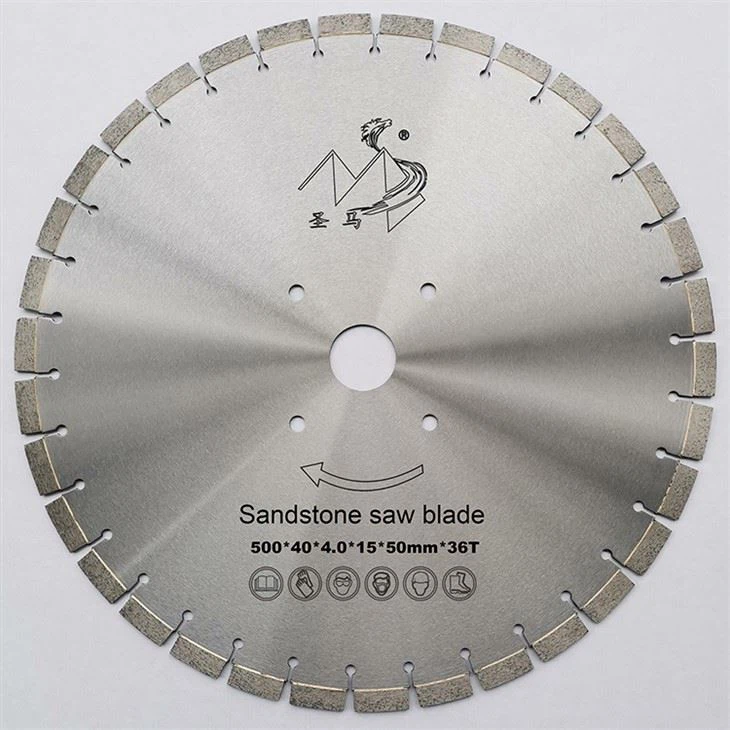
The design of the saw blade also affects its durability. The shape of the segments, the number of segments, and the kerf width all play important roles. Segmented blades, for example, are designed with gaps between the segments. These gaps allow for better heat dissipation during cutting, reducing the risk of overheating and blade warping. A well - designed blade will also have segments that are evenly spaced and of consistent size, ensuring a balanced cutting force. During the manufacturing process, precision is key. Any irregularities in the blade's shape or the placement of the diamonds can lead to uneven wear and reduced durability. Computer - controlled manufacturing processes are now widely used to ensure high precision and consistency in blade production.

Measuring the Durability of Sandstone Saw Blades
Cutting Length
One of the most straightforward ways to measure the durability of a sandstone saw blade is by the total cutting length it can achieve before it needs to be replaced. This is typically measured in linear meters or feet of sandstone cut. A high - durability blade can cut a significantly longer length of sandstone compared to a lower - quality one. However, it's important to note that the cutting length can be affected by various factors, such as the hardness of the sandstone, the cutting speed, and the feed rate. For example, cutting a very hard sandstone at a high speed with a high feed rate will put more stress on the blade and may reduce its cutting length.
Wear Rate
The wear rate of the blade is another important metric. It can be measured by the amount of material lost from the blade over a given period of cutting. A low wear rate indicates a more durable blade. Wear can occur in different parts of the blade, including the segments and the core. Monitoring the wear rate can help users determine when the blade is approaching the end of its useful life and needs to be replaced. Specialized equipment, such as calipers and wear - measuring gauges, can be used to accurately measure the wear rate.
Maximizing the Durability of Sandstone Saw Blades
Proper Selection
Selecting the right saw blade for the specific sandstone cutting application is crucial. Different sandstone types have different hardness levels, grain sizes, and compositions. For example, fine - grained sandstone may require a different blade than coarse - grained sandstone. As a supplier, I always recommend that customers provide detailed information about the sandstone they will be cutting, including its hardness and any special characteristics. This allows me to recommend the most suitable blade for their needs, which in turn maximizes the blade's durability.
Correct Usage
Proper usage of the saw blade is also essential for its durability. Operators should follow the manufacturer's guidelines regarding cutting speed, feed rate, and coolant usage. Using the blade at an appropriate cutting speed and feed rate can prevent excessive wear and heat generation. Coolant is also important as it helps to reduce friction and heat during cutting. Water is a commonly used coolant for sandstone cutting. It not only cools the blade but also helps to flush away the dust and debris generated during cutting, preventing them from causing additional wear on the blade.
Regular Maintenance
Regular maintenance of the saw blade can significantly extend its lifespan. This includes cleaning the blade after each use to remove any dust and debris that may have accumulated on it. Inspecting the blade for any signs of damage, such as cracks or missing segments, is also important. If any damage is detected, the blade should be repaired or replaced immediately. Additionally, sharpening the blade when necessary can restore its cutting performance and extend its durability. However, it's important to use the correct sharpening methods and tools to avoid damaging the blade.
The Importance of Durability in Sandstone Cutting Operations
Cost - Effectiveness
A durable sandstone saw blade can save a significant amount of money in the long run. Although high - quality, durable blades may have a higher upfront cost, they can cut more sandstone over their lifespan, reducing the need for frequent blade replacements. This means lower overall costs for sandstone cutting operations. For example, a construction company that cuts large amounts of sandstone for building projects can save a substantial amount of money by using a durable saw blade.
Productivity
Durable saw blades also contribute to increased productivity. A blade that lasts longer can be used for more continuous cutting without the need for frequent interruptions to replace the blade. This allows for faster completion of sandstone cutting projects. In a busy stone fabrication workshop, for instance, a durable saw blade can help to meet tight deadlines and increase the overall output of the workshop.
If you are in the market for high - quality, durable Sandstone Cutting Saw Blade, I invite you to contact me for more information. I am committed to providing the best sandstone saw blades that meet your specific needs and offer excellent durability. Whether you are a small - scale stone cutter or a large - scale construction company, I can help you find the right blade for your sandstone cutting operations. Let's start a conversation about how we can work together to improve your sandstone cutting efficiency and reduce costs.
References
- "Diamond Saw Blades: Technology and Applications" by John Doe
- "Advanced Cutting Tools for Stone Processing" by Jane Smith
- Industry reports on sandstone cutting and saw blade technology


